IISc Logo

Bachelor of Technology

Indian Institute of Science Bangalore

English
Materials Science and Engineering Banner
Bachelor of Technology

Materials Science and Engineering

About the Programme

The BTech program in Materials Science and Engineering is aimed at producing engineers and leaders who will be at the forefront of the materials revolution that drives our transition into a developed, sustainable, and futuristic society that enables the advancements in artificial intelligence, quantum computing, space, healthcare, energy, and infrastructure.

With a strong emphasis on scientific fundamentals, interdisciplinary learning, and practical problem-solving, the programme equips students with the knowledge and skills required for impactful careers in industry, deep-tech innovation, and advanced engineering domains, while also providing pathways toward higher studies and research.

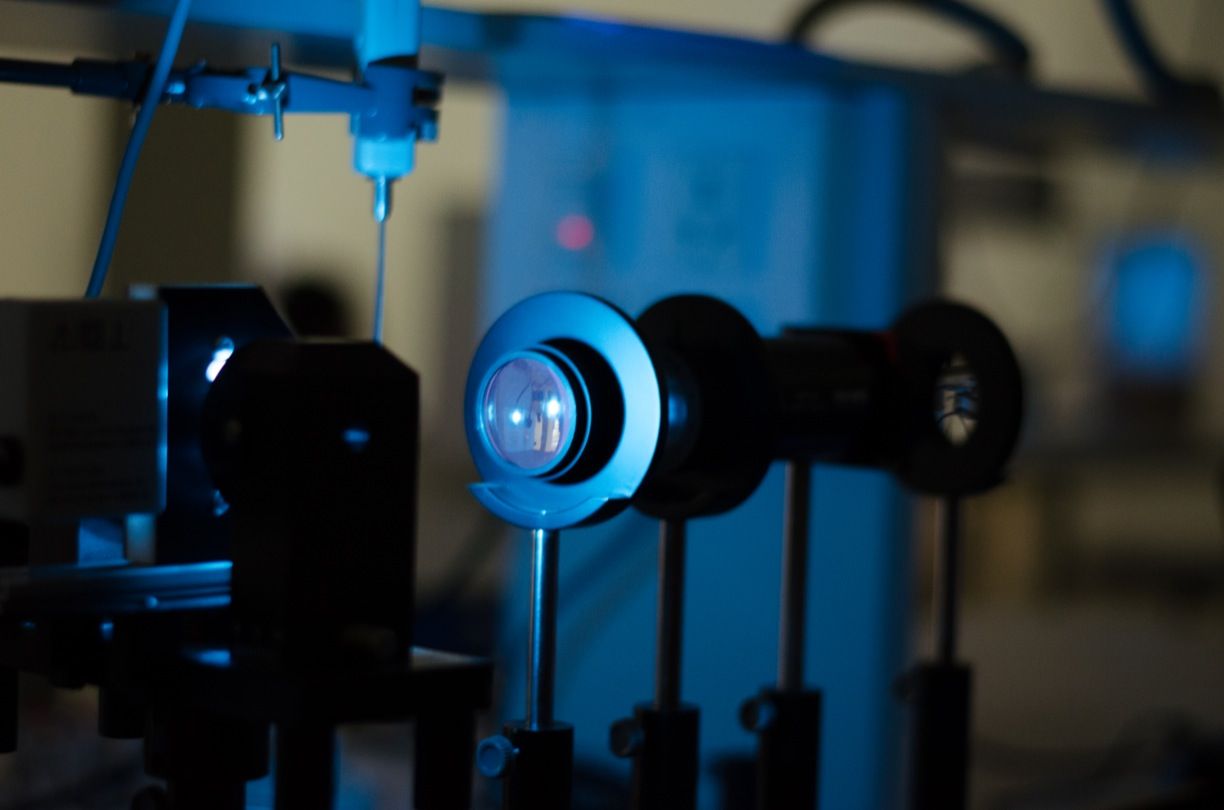
Materials Science Facility
Research at Materials Department

Key Highlights

  • Materials Science Core: Comprehensive training in structure–property–processing relationships of materials, covering metals, ceramics, polymers, electronic materials, biomaterials, and emerging functional materials.
  • Interdisciplinary scientific foundation: Strong grounding in physics, chemistry, biology, mathematics, and computational methods, enabling students to approach materials challenges from multiple scientific perspectives.
  • Innovation-driven curriculum: Focus on designing, characterising, and engineering materials for next-generation applications across energy, electronics, healthcare, aerospace, and sustainability.
  • Institute-wide collaboration: Opportunities to engage with IISc initiatives such as the medical school, AI and high-performance computing centres, and specialised centres of excellence in advanced materials and characterisation.
  • Flexibility through electives and specialisations: Students can shape their academic trajectory through interdisciplinary electives and diverse project opportunities across the Institute.
  • Industry and research exposure: Access to world-class laboratories, collaborative projects, and IISc’s ecosystem in Bengaluru — India’s technology hub — enabling strong academic, industrial, and strategic impact.

Why Materials Science & Engineering

Fostering innovation through the understanding and design of advanced materials for future technologies.

The Foundation

Why Materials Science & Engineering?

  • Materials Science & Engineering focuses on understanding how the structure, properties, and processing of materials influence their performance in real-world applications.
  • The field combines principles from physics, chemistry, and engineering to design advanced materials used in electronics, aerospace, energy, and biomedical technologies.
  • Students develop strong analytical and experimental skills to innovate at the material level.
The Institute

Why Materials Science & Engineering at IISc?

  • IISc offers a research-driven environment with strong interdisciplinary foundations across science and engineering.
  • Students gain exposure to advanced laboratories, modern characterization techniques, and collaborative research opportunities.
  • The academic structure emphasizes both fundamental science and engineering applications of materials.
Uniqueness

What is Unique about IISc Materials Science & Engineering Program?

  • Core scientific and engineering fundamentals are built in the early years, followed by flexible electives aligned with student interests.
  • The curriculum integrates experimentation, computational methods, and real-world research problems.
  • This flexibility allows students to explore areas such as nanomaterials, electronic materials, biomaterials, and energy materials.
Career

What are the Career Options after IISc Materials Science & Engineering?

  • Graduates can pursue careers in semiconductor technology, advanced manufacturing, aerospace materials, energy storage, and research laboratories.
  • Higher studies opportunities include nanotechnology, biomaterials, electronic materials, metallurgy, and materials physics.
  • Emerging areas such as sustainable materials, quantum materials, and next-generation electronics are also growing pathways.