The B.Tech programme in Mechanics and Computing integrates fundamental principles of mechanics with modern computational methods to prepare students for emerging challenges in engineering and technology. The programme develops strong foundations in mathematics, physics, engineering mechanics, and computational sciences, enabling students to analyse complex physical systems, design intelligent solutions, and apply data-driven approaches across diverse engineering domains.
With an emphasis on modelling, simulation, and interdisciplinary problem-solving, the programme equips students with the technical skills required for careers in advanced engineering, robotics, computational design, and technology-driven industries, while also supporting pathways toward higher studies and research.
Key Highlights
Mechanics and Computing Core: Strong foundation in solid and fluid mechanics, dynamics, computational modelling, and numerical methods for analysing engineering systems.
Scientific and computational foundations: Rigorous training in mathematics, physics, and computing to support simulation-driven engineering and modern technological applications.
Modelling and simulation focus: Emphasis on computational tools, system-level design, and hands-on problem-solving through interdisciplinary learning.
Flexible and interdisciplinary learning: Opportunities to explore electives across engineering, AI/ML, robotics, and applied sciences within the Institute.
Industry and innovation exposure: Access to collaborative projects and IISc’s ecosystem in Bengaluru — India’s technology hub — preparing students for impactful engineering careers.
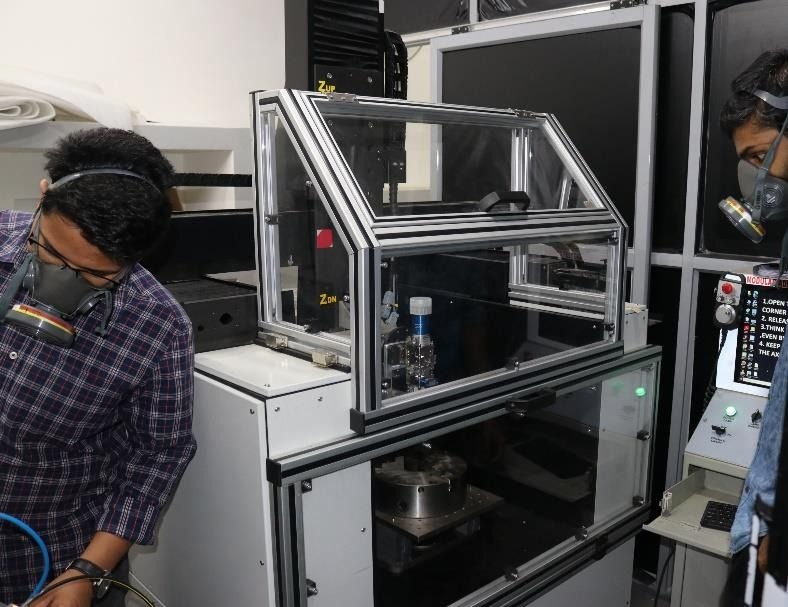
Why Mechanics & Computing
Preparing students to solve complex engineering problems using both mechanical intuition and advanced computing tools.
The Evolution
Why Mechanics & Computing instead of Traditional Mechanical Engineering?
Traditional Mechanical Engineering focuses on physical design, manufacturing, and classical mechanics.
Mechanics & Computing integrates these foundations with modern computational methods such as simulation, numerical modeling, and data-driven engineering.
The program prepares students to solve complex engineering problems using both mechanical intuition and advanced computing tools.
The Institute
Why Mechanics & Computing (M&C) at IISc?
IISc offers a research-oriented and interdisciplinary environment combining mechanics, mathematics, and computational engineering.
Students gain exposure to advanced simulation techniques, robotics, and computational design through hands-on learning and research-driven courses.
The flexible academic structure encourages collaboration with aerospace, AI, materials science, and applied mathematics.
Uniqueness
What is Unique about IISc Mechanics & Computing Program?
Core engineering fundamentals are completed early, followed by flexible electives aligned with computational mechanics and modern engineering systems.
Strong emphasis on numerical methods, modeling, and simulation prepares students for future technology-driven industries.
The curriculum bridges classical mechanics with cutting-edge computational approaches rarely offered in traditional programs.
Career
What are the Career Options after IISc Mechanics & Computing?
Graduates can pursue careers in robotics, simulation engineering, aerospace, automotive technology, advanced manufacturing, and computational engineering.
Higher studies opportunities include computational mechanics, robotics, control systems, AI-driven engineering, and applied mathematics.
Emerging fields such as digital twins, autonomous systems, and high-performance engineering simulations are also popular pathways.